What happened?
NASA's Artemis II crew launched from Kennedy Space Center in Florida on April 1, 2026, flew around the Moon on a mission of about 10 days, and splashed down off the coast of California on April 10 NASA photo page ↗. The crew landed back in Houston the next day NASA photo page ↗.
The four astronauts were commander Reid Wiseman, pilot Victor Glover and mission specialist Christina Koch of NASA, plus mission specialist Jeremy Hansen of the Canadian Space Agency NASA splashdown ↗. NASA described the flight as a test mission NASA splashdown ↗. Their Orion capsule, named Integrity, splashed down in the Pacific near San Diego at 5:07 p.m. Pacific time NASA splashdown ↗ AP via ScienceAlert ↗.
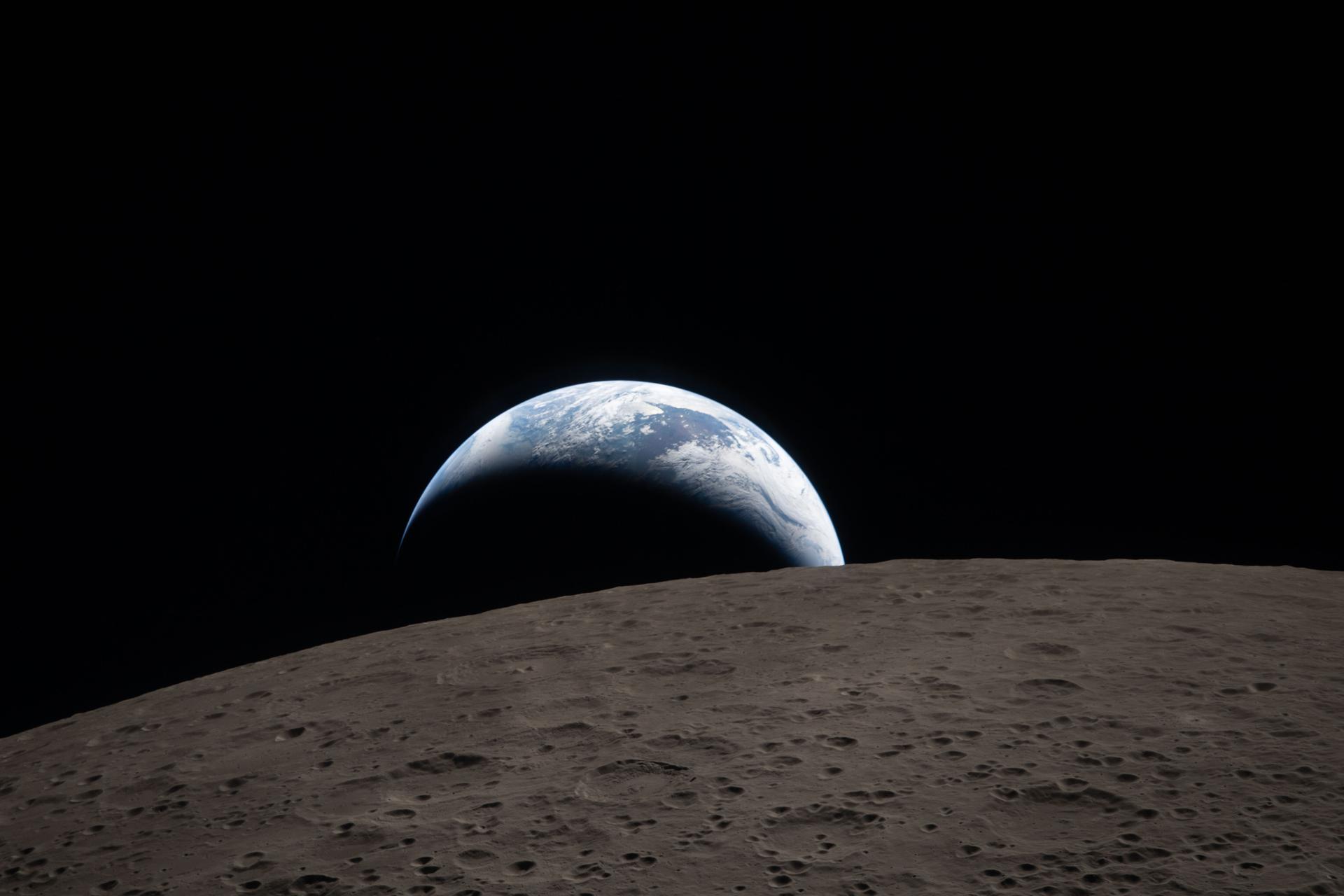
On the way, the crew reached a maximum of 252,756 miles from Earth, passing the distance record set by Apollo 13, the Associated Press reported AP via OPB ↗. They swung behind the Moon and photographed parts of the far side that no human had seen before AP via OPB ↗. Coming home, the capsule hit the atmosphere at about 39 times the speed of sound, which Wiseman called "scary" and "risky" AP via ScienceAlert ↗.
What are the three pieces of the story?
The rocket and capsule
Artemis II was the first crewed flight of NASA's new Moon rocket and Orion capsule. Initial inspections found the rocket and other systems performed well, The Register reported The Register ↗.
The trip
A nearly 10 day loop around the Moon and back, with a U turn behind the Moon at the farthest point AP via OPB ↗. The crew became the most distant human travellers ever AP via ScienceAlert ↗.
The heat shield test
After damage on an uncrewed flight in 2022, NASA changed Orion's re-entry path instead of redesigning the shield The Register ↗. NASA's first checks found it performed as expected The Register ↗.
The point of Artemis II was not new science but trust: proving that the rocket, the capsule and the heat shield can carry people to the Moon and back before anyone tries to land.
Leapscope interpretation of the reported result.How does it work?
Artemis II used NASA's big Space Launch System rocket to send the Orion capsule toward the Moon The Register ↗. The crew did not stop in lunar orbit or land. Instead, the path carried them around the far side of the Moon and back toward Earth, with a U turn behind the Moon at the farthest point AP via OPB ↗. That kind of route lets a crew test life support, navigation and communication far from home while keeping the mission simple.
Distance from Associated Press reporting AP via OPB ↗; landing accuracy from The Register's report on NASA's initial findings The Register ↗.
The riskiest part is coming home. Orion hits the air at very high speed, and a heat shield on its base burns away slowly to protect the crew. On the uncrewed Artemis I flight in 2022, the shield came back with unexpected cracks and charring, which NASA linked to gas trapped in the coating during a "skip" re-entry The Register ↗. For Artemis II, NASA dropped the skip and changed the path The Register ↗. NASA's initial inspections found char loss was much smaller than on Artemis I, and Orion landed 2.9 miles from its target The Register ↗. The crew said they saw a small loss of charred material where the shield meets the capsule, and NASA plans further detailed checks AP via ScienceAlert ↗ The Register ↗.
Which fields could this affect?
Artemis II is a test flight, so its value is mostly in what it makes possible later; these connections are our assessment.
Human spaceflight safety
The flight gave NASA real data on Orion with people on board, including how the changed re-entry path and heat shield behaved The Register ↗.
A return to the Moon's surface
AP reported NASA plans an Artemis III docking practice next year and a landing attempt near the lunar south pole in 2028 AP via OPB ↗. Artemis II is the step before that.
Trips beyond the Moon
NASA lists groundwork for future crewed missions to Mars among the mission's goals NASA splashdown ↗. Any such trip is many years and many missions away.
What has been checked?
The evidence is a public flight watched around the world, NASA's own statements and independent news reporting. Leapscope reviewed these sources; we did not repeat or check any measurements.
Shown so far
- NASA confirmed the launch on April 1, 2026, and splashdown off California on April 10 NASA photo page ↗ NASA splashdown ↗.
- The Associated Press reported the crew passed Apollo 13's distance record, reaching 252,756 miles from Earth AP via OPB ↗.
- NASA's initial inspections found the heat shield performed as expected, with much less char loss than on Artemis I The Register ↗.
Still unknown
- What NASA's detailed heat shield scans will show; the crew saw a small loss of charred material that still needs study AP via ScienceAlert ↗ The Register ↗.
- Whether the commercial lunar lander hardware needed for later missions will be ready on time, a question The Register raised The Register ↗.
- How fixes found on this flight, such as a faulty space toilet, will be handled before longer missions AP via OPB ↗.
Evidence status: Public crewed flight. Stage: Verified. The mission was flown in public and confirmed by NASA.
From flyby to landing
These dates come from news reports of NASA's plans and can change; they are not a promised timetable.
Can I use it today?
You can browse NASA's photos and pages about the launch, splashdown and crew return NASA photo page ↗ NASA splashdown ↗. No public flights to the Moon are available, and no one has landed on the Moon in this programme yet.
A few things you might be wondering
Did the Artemis II astronauts land on the Moon?
No. They flew around the Moon and came back without landing NASA photo page ↗ AP via OPB ↗. A landing attempt is planned for a later mission, which AP reported as Artemis IV in 2028 AP via OPB ↗.
Who was on the Artemis II crew?
Reid Wiseman, Victor Glover and Christina Koch of NASA, and Jeremy Hansen of the Canadian Space Agency NASA splashdown ↗.
Did they set a record?
Yes, according to AP. The crew reached 252,756 miles from Earth, farther than Apollo 13, the previous record holder AP via OPB ↗.
Was the heat shield safe?
NASA's first inspections found it performed as expected, with much less damage than on the 2022 uncrewed flight The Register ↗. More detailed checks are still planned The Register ↗.
Go straight to the sources
Checked Oct 8, 2026. The first source is the original announcement or research. Later sources add independent context; background pages do not validate the result on their own.
01NASA image page confirming the launch date, the roughly 10 day trip around the Moon and the April 10 splashdown.
NASA page with the crew list, splashdown time and location, and the mission's stated goals.
News report on the record distance, the far side photos and NASA's plans for Artemis III and IV.
The crew's own account of re-entry, the heat shield and the view of the far side.
Report on NASA's initial heat shield findings, landing accuracy and the schedule for Artemis III.