What happened?
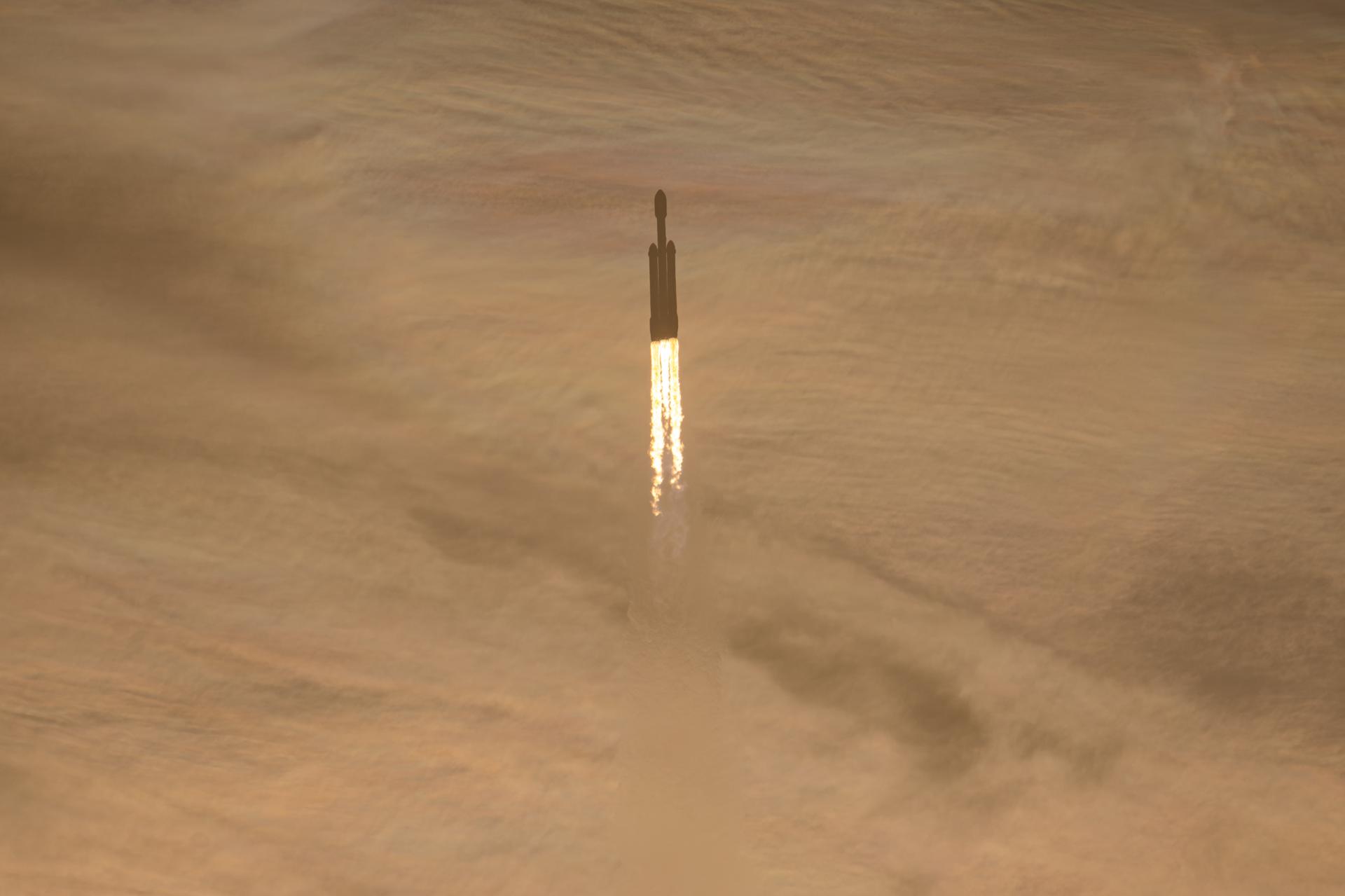
NASA's Nancy Grace Roman Space Telescope launched on August 30, 2026, at 7:26 a.m. Eastern on a SpaceX Falcon Heavy from Kennedy Space Center in Florida NASA release ↗. It is heading to a point about one million miles from Earth to study dark matter, dark energy and planets around other stars NASA release ↗.
The launch went smoothly. Ground control began receiving data seven minutes after liftoff, the telescope separated from the rocket 31 minutes in, and the solar panels and a sun shade deployed about 1 hour and 23 minutes after launch NASA release ↗. The two side boosters landed back at Cape Canaveral NASA release ↗ Associated Press ↗. NASA said the telescope was finished early, so it worked with SpaceX to move the launch date forward NASA release ↗. The Associated Press reported the launch came nearly a year ahead of schedule and within budget, putting the cost at $4.3 billion Associated Press ↗.
Administrator Jared Isaacman said Roman was "delivered ahead of schedule and on budget" NASA release ↗. The telescope is named after Nancy Grace Roman, NASA's first chief astronomer, who was called the "Mother of Hubble" and died in 2018 Associated Press ↗. It is NASA's first space telescope named after a woman Associated Press ↗. Its main mirror, the same 2.4 meter size as Hubble's, was surplus from a spy satellite program and donated by the National Reconnaissance Office Associated Press ↗.
What are the three pieces of the story?
The trip
About three months to the second Sun Earth Lagrange point, a stable spot also used by Webb, then three months of checks before science begins NASA release ↗ Associated Press ↗.
The camera
The Wide Field Instrument is a 300 megapixel infrared camera made of 18 detectors NASA release ↗. AP reported it matches Hubble's sensitivity with a field of view over 100 times wider Associated Press ↗.
The planet imager
A coronagraph blocks starlight so faint planets nearby can be seen Associated Press ↗. It will photograph Jupiter like planets and test methods for future Earth hunting missions NASA release ↗.
Roman's power is breadth. Hubble takes deep, narrow looks; Roman is built to map huge areas quickly, which is what you need to measure how the whole universe is expanding.
Leapscope interpretation of the reported result.How does it work?
Think of Roman as a survey camera. NASA says it can survey the sky about 1,000 times faster than Hubble NASA release ↗. Senior project scientist Julie McEnery told AP that a month of Roman observations of the Milky Way would take Hubble a century Associated Press ↗. Sci.News reported Roman could measure light from about one billion galaxies over its lifetime Sci.News ↗. Mapping that many galaxies lets scientists trace how dark energy, the unknown force speeding up the universe's expansion, has acted over time Associated Press ↗.
Figures from NASA's launch release, August 30, 2026 NASA release ↗.
All that sky means a flood of data. Roman will send back 1.4 terabytes a day, the highest data rate of any NASA astrophysics mission so far NASA release ↗. NASA says machine learning, AI and citizen scientists will help sort the data and flag interesting finds NASA release ↗. Once Roman spots planets, the Webb telescope can study them in more detail Associated Press ↗.
Which fields could this affect?
Roman is a science mission first. These connections are our assessment of where its results could matter.
Cosmology
Wide maps of galaxies should help measure dark matter, dark energy and how fast the universe is expanding NASA release ↗ Associated Press ↗.
Explore sciencePlanet hunting
NASA's Nicky Fox said Roman will find tens of thousands of planets, which Webb can then follow up Associated Press ↗.
Explore scienceFinding Earth like worlds
The coronagraph tests technology that future missions such as the Habitable Worlds Observatory concept could use to image Earth like planets NASA release ↗.
What has been checked?
The launch was public and confirmed by NASA, with independent press coverage. Leapscope reviewed these sources; no science results exist yet.
Shown so far
- Roman launched on a Falcon Heavy on August 30, 2026, and separated from the rocket NASA release ↗ Associated Press ↗.
- Its solar panels and lower sun shade deployed after launch NASA release ↗.
- NASA and AP both report the mission arrived ahead of schedule and on budget NASA release ↗ Associated Press ↗.
Still unknown
- Whether the remaining deployments, including the high gain antenna and aperture cover, go as planned NASA release ↗.
- How the instruments perform once switched on in space NASA release ↗.
- What Roman will actually discover; NASA expects first images only by early 2027 NASA release ↗.
Evidence status: Public launch. Stage: Verified. The launch happened in public and was confirmed by NASA.
From launch to first light
These steps follow NASA's stated plan; dates can change.
Can I use it today?
You can read NASA's launch release and follow mission updates as the telescope travels NASA release ↗. NASA says citizen scientists will help sort Roman's data, so watch for chances to take part once science begins NASA release ↗.
A few things you might be wondering
Is Roman a replacement for Hubble?
No. It has a mirror the same size as Hubble's but a field of view over 100 times wider, built for fast wide surveys Associated Press ↗. Hubble and Webb do deeper, narrower looks.
When will we see Roman's first pictures?
NASA expects to release the first images by early 2027 NASA release ↗.
Will Roman look for life?
Not directly. AP reported it is not designed to search for life, but NASA says it will help future observatories answer whether we are alone Associated Press ↗.
How much did Roman cost?
AP put the cost at $4.3 billion and said it launched within budget Associated Press ↗.
Go straight to the sources
Checked Oct 8, 2026. The first source is the original announcement or research. Later sources add independent context; background pages do not validate the result on their own.
01NASA's launch release with timeline, instruments and plans for first images.
AP report on the launch, cost, the mirror's origin and the telescope's namesake.
Science news report on the launch and Roman's expected galaxy survey.
Another major 2026 space milestone a month after Roman's launch.
NPR report on Starship's first orbit and NASA's plans that depend on it.